Clutches are wear items, like brake pads. Every time you pull away or change gear, the friction material wears a little. How long a clutch lasts depends far more on how and where the car is driven than on mileage alone.
This guide explains how to recognise clutch problems, which faults can be repaired, when a replacement is unavoidable, and how to make a new clutch last.
How a clutch works
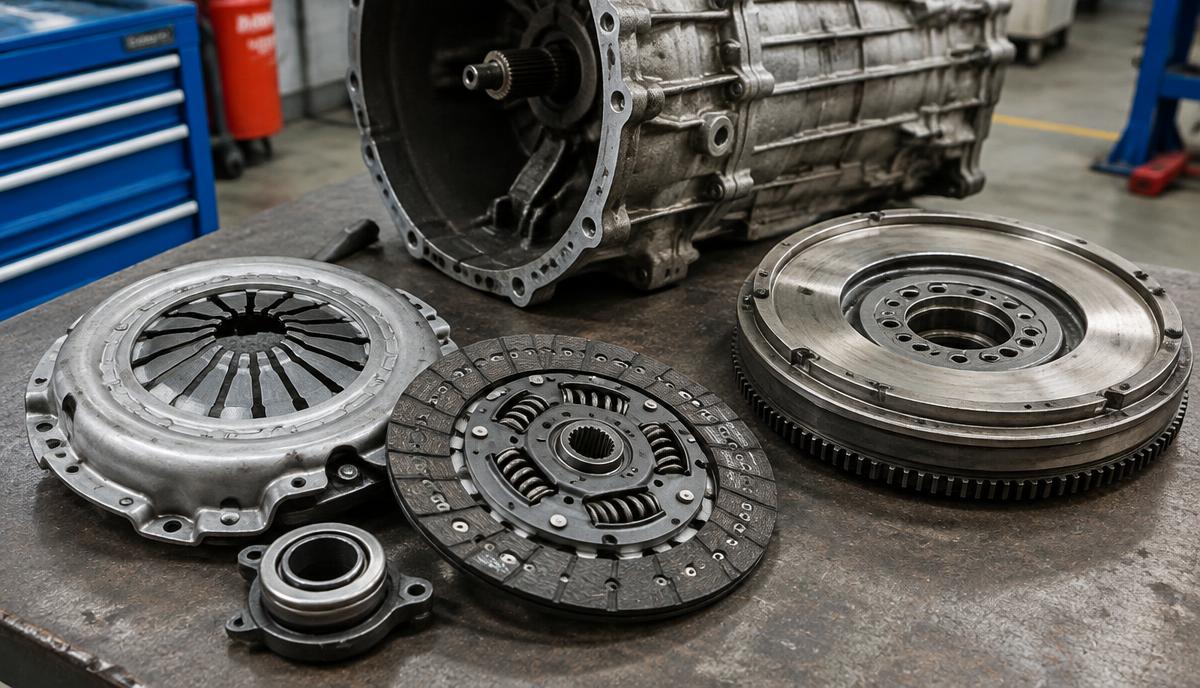
The clutch connects the engine to the gearbox. A friction disc sits between the engine's flywheel and a spring-loaded pressure plate. With the pedal up, the springs clamp the disc so engine power reaches the wheels. Pressing the pedal operates a release bearing, through a hydraulic system or cable, which releases the clamping force so you can change gear.
Many modern diesels and larger petrol cars use a dual mass flywheel (DMF), which has internal springs to absorb vibration. DMFs wear too, and are often checked or replaced at the same time as the clutch.
Signs your clutch is wearing out
Slipping
Engine revs rise but the car does not accelerate as it should, especially in higher gears or uphill. A slipping clutch has worn friction material and needs replacing.
A high biting point
If the clutch only engages near the top of the pedal travel, the friction plate is usually well worn.
Judder when pulling away
Shuddering as the clutch engages can come from a contaminated or worn friction plate, a worn DMF or worn engine mounts.
Difficulty selecting gears
Crunching or struggling to get into gear can mean the clutch is not fully releasing, which is often hydraulic: low fluid, air in the system or a failing slave cylinder.
Noises
A whirring or rumbling that changes when you press the pedal often points to the release bearing. A rattle at idle that disappears when the pedal is pressed can indicate a worn DMF.
A heavy, spongy or sticking pedal
A pedal that sinks, stays down or feels inconsistent usually indicates a hydraulic or cable problem rather than a worn plate.
Faults that can be repaired
- Leaking clutch master cylinder or slave cylinder (concentric slave cylinders are inside the bell housing and usually replaced with the clutch)
- Air in the hydraulic system, fixed by bleeding
- Stretched or frayed clutch cable on older cars
- Worn pedal bushes or a faulty clutch pedal switch
- Engine or gearbox mount wear causing judder
When the clutch must be replaced
If the friction plate is worn, contaminated with oil or burnt, it has to be replaced. Because the gearbox has to come out to reach it, the pressure plate and release bearing are almost always replaced at the same time as a kit. Fitting just a friction plate saves little on parts and risks paying the same labour again soon.
The flywheel is inspected while the gearbox is out. A solid flywheel may be reusable if it is within limits. A DMF is checked for excessive free play and noise, and replaced if worn. Any oil leak from the crankshaft rear seal or gearbox input seal should be fixed at the same time, because oil contamination destroys a new clutch.
Labour varies a lot between cars: some gearboxes are easy to remove, others need subframes lowered. You can read more on our clutch repairs page.
How to make your clutch last longer
- Don't rest your foot on the pedal while driving.
- Use neutral and the handbrake at traffic lights rather than holding the clutch down.
- Avoid holding the car on hills with the clutch; use the handbrake or hill-hold.
- Pull away with gentle revs and avoid slipping the clutch for long periods.
- After a new clutch, drive normally but avoid towing or hard launches for the first few hundred miles while it beds in.
- Get noises or changes in pedal feel checked early. A hydraulic fault left alone can damage other parts.
Frequently asked questions
Clutch slipping, juddering or making noise? Tell us the symptoms and we'll give you a clear quote.
Get a clutch quote